
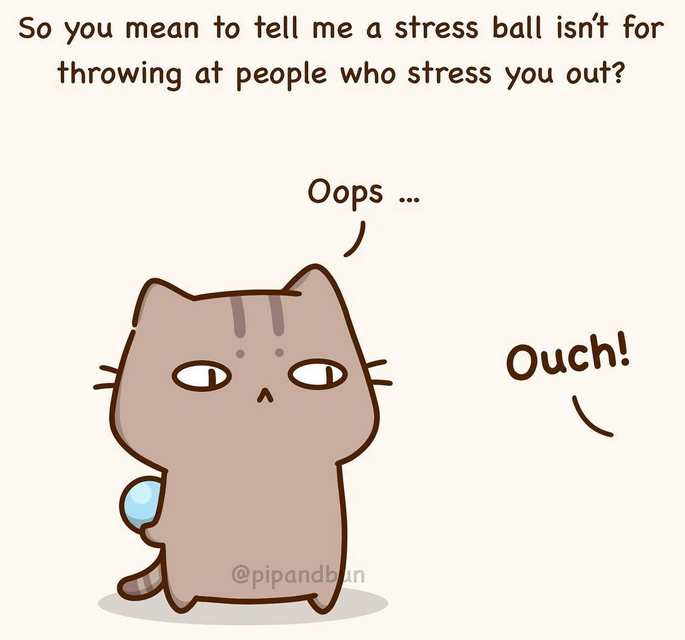
April is Stress Awareness Month, an annual campaign since 1992 designed to increase public awareness about the causes, effects, and management of stress. It highlights the impact of chronic stress on physical and mental health, offering resources to reduce stigma and promote coping strategies like mindfulness, exercise, and setting boundaries.
I can bet there is not a single person on the planet who has responsibilities and has never said, at one point or another, that they are stressed. The reason I tacked on “who has responsibilities” is because children do not usually say they are stressed, and that is mostly because they do not have much to be stressed about. The stakes are just not that high when you are young. But once you get into your preteen years and beyond, the stakes start to rise, and it is not unheard of to hear an eleven-year-old say they are stressed about exams or whether they will make the team.
The older we get, the more there is to stress about, until you are in your 60s and 70s and the things that used to cause you so much stress lose a lot of their… well, stressfulness. This lines up with the Curve of Happiness, a U-shaped graph that suggests life satisfaction is high in youth, dips to a low point in midlife (roughly ages 40–50), and rises again in old age.

This pattern is driven by developmental changes in emotional regulation, lowering expectations, and increased gratitude, though it is influenced by factors like health, financial stability, and culture.
There is a tension between valuing high productivity (“hustle culture”) and the recognized need for self-care. Stress is often seen as a barrier to productivity but also a result of overworking. Which is why, if the Curve of Happiness is a U-shaped graph, stress generally follows an inverted U-shape across the human lifespan, peaking in midlife before declining in later life. This pattern is often referred to as a “paradox” because many indicators of stress peak in the 40s and 50s, a time when people might be expected to have more stability, before dropping significantly after age 50.
Endocrinologist Hans Selye (1907–1982) coined the terms “eustress” and “distress” to differentiate between positive and negative stress. Known as the “father of biologic stress”, he introduced “eustress” in 1974 to describe positive, motivating stress, while “distress” refers to the harmful, destructive type of stress.
I live with three anxiety disorders – PTSD, OCD, anxiety – and, occasionally, depression. But lucky for me, stress… or rather, distress, is not something I struggle with as I am a eustress girlie. I only get stressed when I am tackling big projects, and as soon as they are done, my stress exits stage left.
According to Dr. Andrew Huberman (you know I had to 😊), the key difference between good stress (acute/adaptive) and bad stress (chronic/maladaptive) is duration and mindset. Short-term stress increases adrenaline, enhances immune function, improves focus and performance, and is temporary, allowing the body to return to a calm state. On the other hand, prolonged or frequently re-triggered stress inhibits sleep, leads to burnout, impairs mental health, and increases long-term risk of heart disease.
A key indicator of bad stress is its interference with sleep. During periods of intense work demands earlier in my career, I would often struggle to fall – or, even worse, stay – asleep because my mind would keep running through my never-ending to-do list. Once the project was finished, that mental noise would stop almost immediately, and I would return to a calm state.
Society today often frames stress as an inevitable, unavoidable part of modern life, frequently linked to the fast-paced nature of work, technology, and constant connectivity. This is why a mindset shift, viewing stress as a necessary, potentially positive tool for performance rather than a harmful event, is vital for stress management. Other stress management techniques include, but are not limited to, meditation and breathing exercises, social connection to ease anxiety, and consistent routines such as sleep, exercise, and a healthy diet to build resilience.
The goal is not a stress-free life, but a better relationship with stress itself. So rather than seeing stress as something purely negative, it may be more accurate to see it as something dynamic, shaped by age, mindset, and circumstance, and something we learn to manage – and even harness – rather than fear.
 Lwile the Leo