
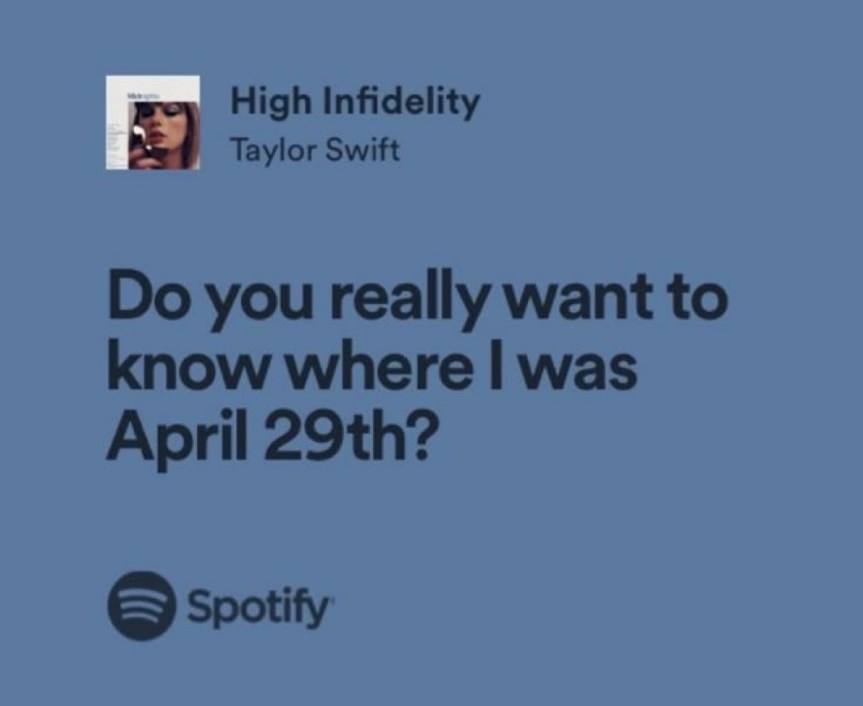
Happy High Infidelity Day to all who celebrate 💙🕰️
For those who do not celebrate and consequently have no idea what I am talking about, perhaps you can raise a glass to this being my 200th post on Lwile the Leo! TWO-FUCKING-HUNDRED!! Wapi shangwe na vigelegele!!!
Toward the end of 2025, while working on my 2026 content calendar, I did not initially pencil in anything for today. But at the beginning of this year, as I compiled a list of my published blog posts, I noticed that I was nine posts away from the 200 milestone. It was at that moment I began considering what my 200th post would be, as it needed to match the significance of the milestone. I did not get around to working on a March Mental Health Monday post, a World Health Day (April 7th) post, or a 420 post, otherwise I might have reached the milestone sooner. I would have LOVED to reach it with the 420 post, but it be like that sometimes 🥲
I kinda, sorta forgot about the 200 milestone in March, but after publishing this month’s Mental Health Monday post (Let’s Talk About Stress, Baby) I realised that my next post would be my 200th. After 420 came and went, I clocked that April 29th falls on a Wednesday, aka the OG Lwile the Leo write day. This convinced me that the Universe had decided to get involved in my content calendar just so I could talk about one of my favourite people for my 200th post: Taylor Alison Swift. After all, I am not called TAYlerie (by myself and a friend) for nothing.
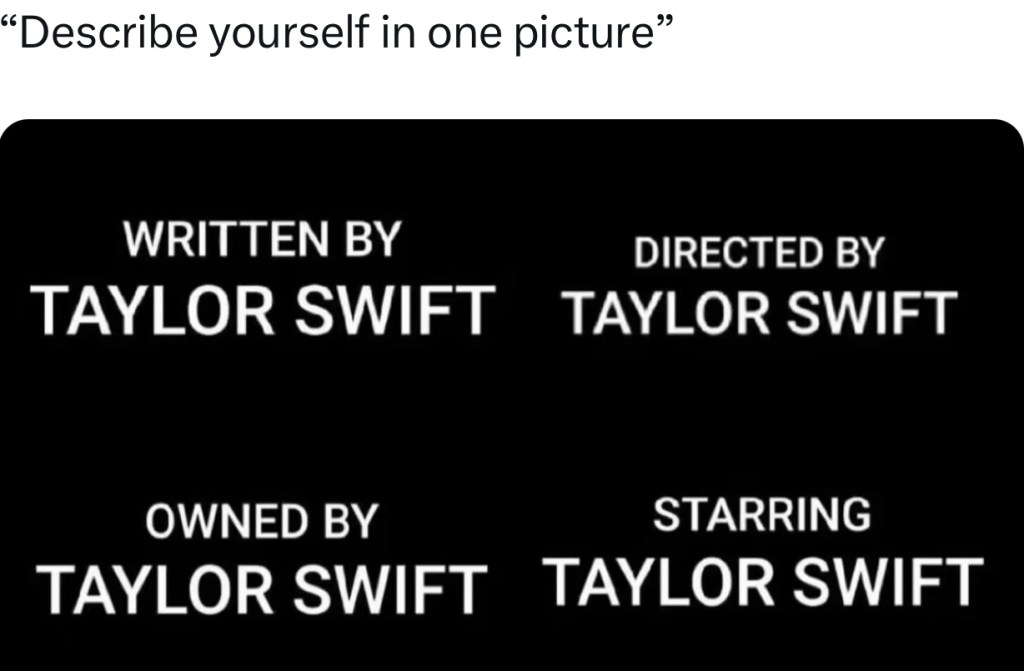
To every non-Swiftie reading this, High Infidelity Day is a fan-coined holiday celebrated by Swifties on April 29th, rooted in the lyrics of a song from her tenth studio album, Midnights.
You know there’s many different ways that you can kill the one you love
The slowest way is never loving them enough
Do you really wanna know where I was April 29th?
Do I really have to tell you how he brought me back to life?
To know Taylor Swift is to know that she is a mastermind and nothing she does is accidental. Not the Track Fives, not the capitalised letters in early liner notes, and certainly not a date that sounds like a throwaway line but has an entire emotional crime scene buried underneath it.
On April 29, 2016, Calvin Harris and Rihanna released the global smash This Is What You Came For. At the time the song had no visible trace of Taylor on it, but it turns out she wrote it under the pseudonym Nils Sjöberg. And that is where the spiral begins.
Taylor and Calvin dated for around 15 months, and at the time it was one of her longest publicly known relationships. She wrote This Is What You Came For during their relationship and even recorded a demo, with her boyfriend doing the production… or whatever it is Calvin Harris does. No shade 😅 However, Tayvin jointly decided that releasing the song as a duo would overshadow the track itself, and that it would be best to use her lyrics but not her vocals, so Taylor opted to use a pseudonym in the writing credits.
On the day of the track’s release, Calvin shot down rumours of a collaboration with Taylor during an interview with Ryan Seacrest. Rather than giving a vague media-trained answer, he said that the pair “haven’t even spoken about” working together and added, “I can’t see it happening though.”
Now layer in the social timeline, because of course there is one. Around that same time, Taylor was moving through a very public circle of events, notably Gigi Hadid’s 21st birthday party on April 28th. Within weeks, her relationship with Calvin ended and almost immediately she was linked to Tom Hiddleston.
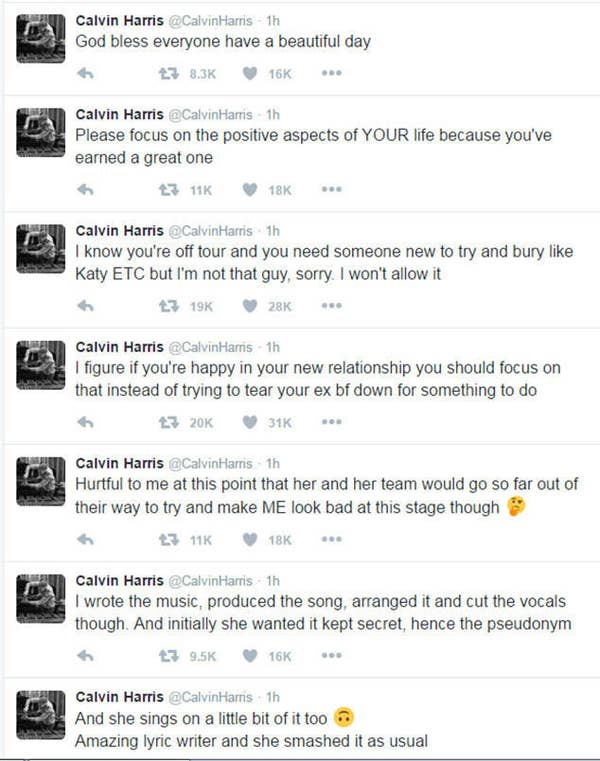
Shortly after Tayvin’s breakup, Taylor’s team confirmed to the press that she was Nils Sjöberg. They revealed that she had written the song, recorded a demo (with her vocals faintly layered into the final track), and had initially chosen to keep her name off it. What makes the reveal so deliciously unhinged is the full-blown meltdown Calvin Harris had on Twitter shortly after:
Weuh!!
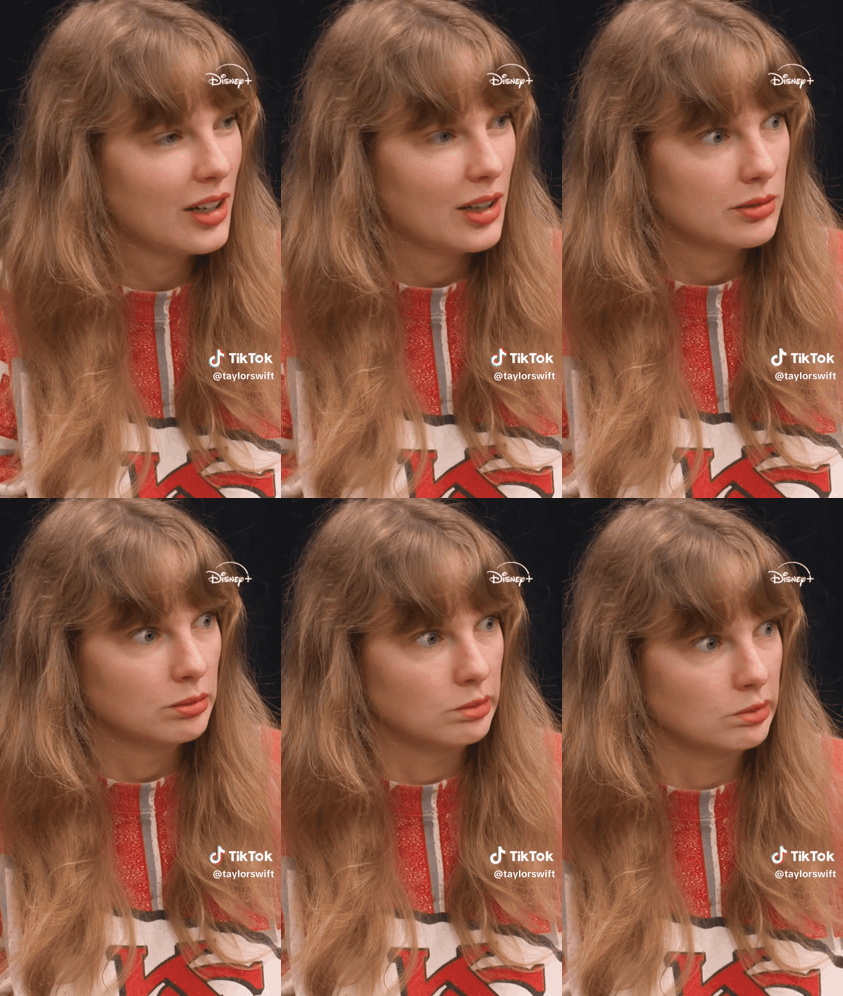
When High Infidelity later asks that pointed question about April 29th, it does not feel like curiosity. It feels like a dare. Like something that might have led American author John Henry Reese to caution, “don’t ask questions that you don’t want the answer to.” Because Do you really wanna know? implies that the real story would complicate the narrative people had accepted as true.
Taylor has obviously never confirmed the specifics, and that silence leaves just enough ambiguity for fans to build an entire mythology around it. My theory is that the word “infidelity” stretches here. It may gesture toward cheating, but in Taylor’s writing it often expands to include emotional drift, secrecy, and the quiet betrayals that happen before anything official ends.
Every year since the release of Midnights, when April 29th rolls around Swifties gather to celebrate High Infidelity Day. It trends online with memes, theories and jokes about “where she was.” Taylor herself even leaned into it by performing the song on April 29, 2023, at the Atlanta, Georgia stop of The Eras Tour.
Zooming in on what High Infidelity Day says about fandom culture, the power of collective interpretation comes into focus. A lyric on its own is incomplete, and only becomes meaningful through repetition, remixing, and shared understanding. Fans are not just consuming content. They are actively interpreting it and adding layers that may or may not have been intended. Swifties especially excel at meaning-making because our Fearless leader’s writing style invites decoding – specific dates, layered narratives, recurring themes – and we have been trained over time to look for clues, connections, and subtext.
This trend explains how High Infidelity Day functions like shorthand. You either understand it immediately, or you do not. If you understand it, you are already part of the conversation. If you do not, there is no immediate explanation waiting for you. That gap is not exclusion by design but it does create a boundary, and recognition is how you cross it. Recognition is how communities signal belonging, and while this dynamic is not unique to Swifties, we are particularly visible and consistent in how we do it.
Kenyan Swifties are just as involved, as our WhatsApp group chat makes clear. At exactly midnight, someone posted, “Do you really wanna know where I was April 29?”, steering conversation in the group, along with WhatsApp status updates, towards High Infidelity Day.
Social media plays a crucial role in amplifying micro-holidays as platforms reward repetition and trend formation. A single idea can scale quickly when it is easy to participate in, and High Infidelity Day works because it is simple, specific, and tied to an existing emotional hook.
Naturally, this has broader implications for how communities create belonging. Shared meaning creates connection without physical proximity, and participation (posting, referencing, understanding) becomes identity. These micro-moments build a sense of “we” that extends beyond fandoms. You see it in running communities (hiii We Run Nairobi 👋), where certain routes or phrases carry shared meaning; in professional spaces, where language signals alignment or experience; and in smaller online groups, where a single phrase can carry entire conversations.
April 29th is not just a date from a song. It is an example of how communities shape culture in real time. Once a way of life we received fully formed, culture is now something we recognise, participate in, and reshape together, often without realising it is happening.
 Lwile the Leo
You write so well! As always!
I am always drawn in by your literary prowess. I enjoyed your style of writing in this article.
LikeLike
Thank you kababy 🫶
And I greatly appreciate you for being the first – and mostly only 🥲 – commenter 😘
LikeLike